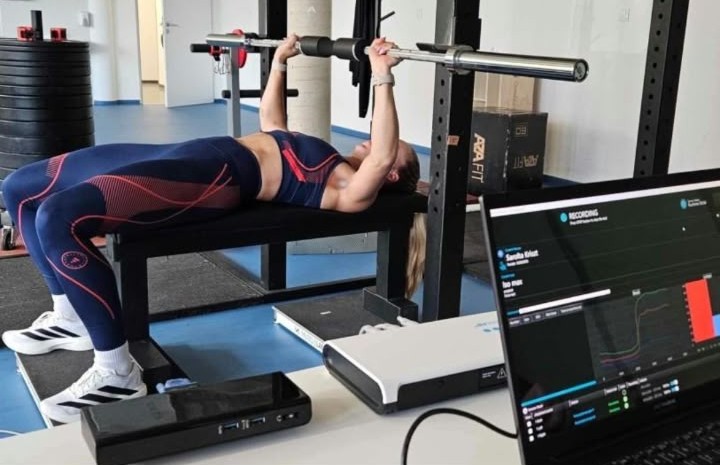
| 01. 1RM Bench Press |
Upper-Body Strength |
Assess maximal pressing strength. |
Maximum valid load (kg). |
Next → |
| 02. 1RM Back Squat |
Lower-Body Strength |
Assess maximal squat strength. |
Maximum valid load (kg). |
Next → |
| 03. 1RM Deadlift |
Full-Body Strength |
Assess maximal deadlift strength. |
Maximum valid load (kg). |
Next → |
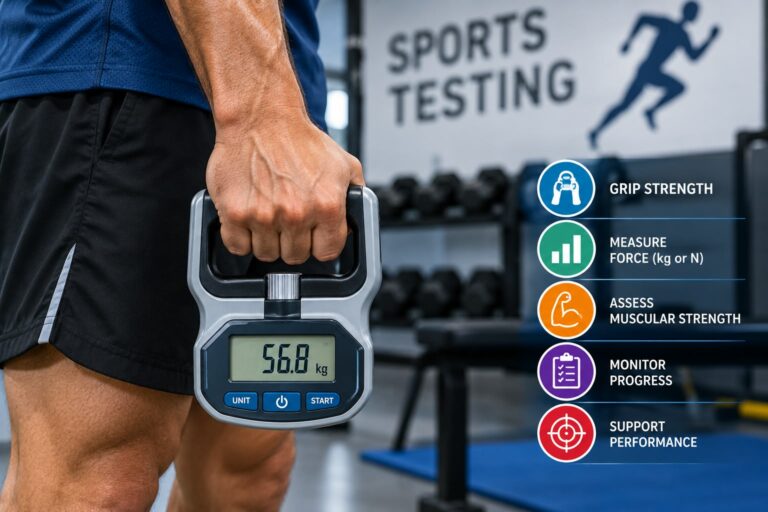
| 04. Handgrip Dynamometry |
Grip Strength |
Measure handgrip force. |
Device reading (kgf or N). |
Next → |
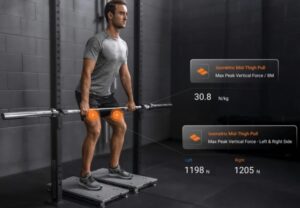
| 05. Isometric Mid-Thigh Pull |
Isometric Strength |
Assess force in a standardized pulling position. |
Peak force (N). |
Next → |
| 06. Isometric Knee Extension |
Lower-Body Strength |
Measure knee-extensor force. |
Force (N) or torque (N·m). |
Next → |
| 07. Isokinetic Dynamometry |
Machine-Based Strength |
Assess joint torque at controlled speed. |
Peak torque (N·m). |
Next → |
| 08. Five-Repetition Maximum (5RM) |
Submaximal Strength |
Assess the heaviest valid five-repetition load. |
Load completed (kg). |
Next → |
| 09. Push-Up Test |
Muscular Endurance |
Assess repeated upper-body actions. |
Valid repetitions. |
Next → |
| 10. Isometric Back / Trunk Test |
Trunk Strength |
Assess trunk or back force. |
Force (N) or torque (N·m). |
Next → |
| 11. Single-Leg Isometric Force Test |
Unilateral Strength |
Compare force produced by each limb. |
Force or torque per side. |
Next → |
| 12. Countermovement Jump |
Explosive Power |
Assess lower-body explosive performance. |
Jump height (cm). |
Next → |
| 13. Squat Jump |
Explosive Power |
Assess vertical jump performance. |
Jump height (cm). |
Next → |
| 14. Standing Broad Jump |
Explosive Power |
Assess horizontal jump performance. |
Distance (cm or m). |
Next → |
| 15. Medicine Ball Throw |
Upper-Body Power |
Assess explosive throwing performance. |
Throw distance (m). |
Next → |
| 16. Rate of Force Development (RFD) |
Rapid Force Production |
Assess how quickly force increases. |
Force-time slope (N/s). |
Next → |
| 17. Isometric Shoulder Strength |
Upper-Body Strength |
Assess shoulder force in a defined position. |
Force (N) or torque (N·m). |
Next → |
| 18. Functional Strength Assessment |
Task-Specific Strength |
Assess force capacity during a defined task. |
Task-specific score and units. |
Finish ↓ |